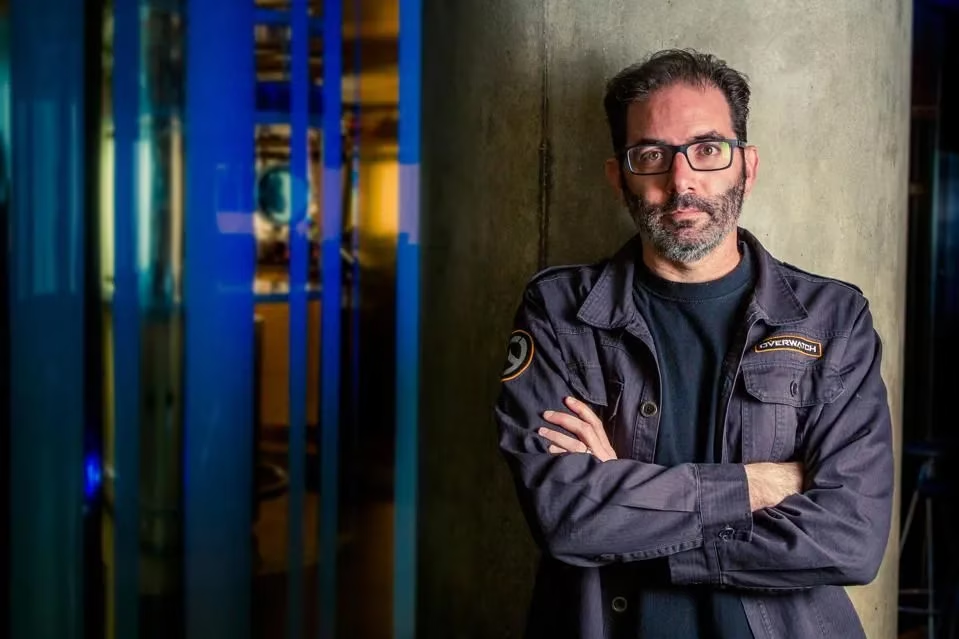
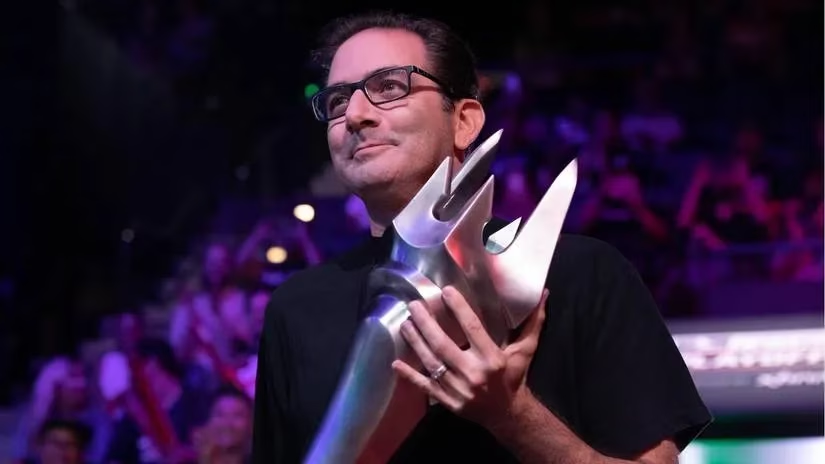
In the spring of 2021, the hero shooter community felt an unexpected tremor. Jeffrey Kaplan, the man who had become the public face of Overwatch and one of Blizzard Entertainment’s most beloved designers, announced he was stepping away after 19 years. For many fans, it felt less like a corporate personnel change and more like losing the captain of a ship they had sailed on for years. His calm voice, thoughtful developer updates, and genuine enthusiasm had turned him into a rare figure in gaming: a director people trusted.
A Farewell That Shook the Playerbase
Kaplan’s goodbye arrived quietly through a written statement posted on social media. He described his time at Blizzard as “truly the honor of a lifetime,” referencing the privilege of creating worlds and heroes for such a passionate audience. There was no dramatic press conference, no detailed explanation. That simplicity made the announcement hit even harder. Players flooded forums, shared memories, and thanked the man who had guided Overwatch from an ambitious prototype into a global phenomenon.
Blizzard moved quickly to reassure the community. Aaron Keller, an 18-year veteran, stepped into the game director role. While Keller was respected internally, he had enormous shoes to fill. Fans were left wondering whether the spirit of Overwatch could survive without the person who had shaped much of its identity.
Searching for Reasons Behind the Exit
At the time, Kaplan did not give a precise reason for leaving. That silence opened the door for speculation. One popular theory pointed to the slow rollout of new content. During that period, many Overwatch players complained that updates had become sparse, and frustration appeared to be growing on both sides of the development fence. Even so, Kaplan specifically said development on Overwatch 2 was “continuing at a good pace” and promised more frequent updates soon.
Another idea revolved around Blizzard’s broader staff changes. Several longtime developers had recently departed, and some observers believed the studio was entering a period of institutional turnover. Under that theory, Kaplan’s exit was part of a larger wave rather than an isolated decision.
A simpler explanation also held weight. After almost two decades in one place, Kaplan may have simply wanted a new chapter. For someone who had helped build World of Warcraft systems and later led a beloved hero shooter, the desire to explore fresh creative territory seemed entirely human.
Five Years On: Looking Back From 2026
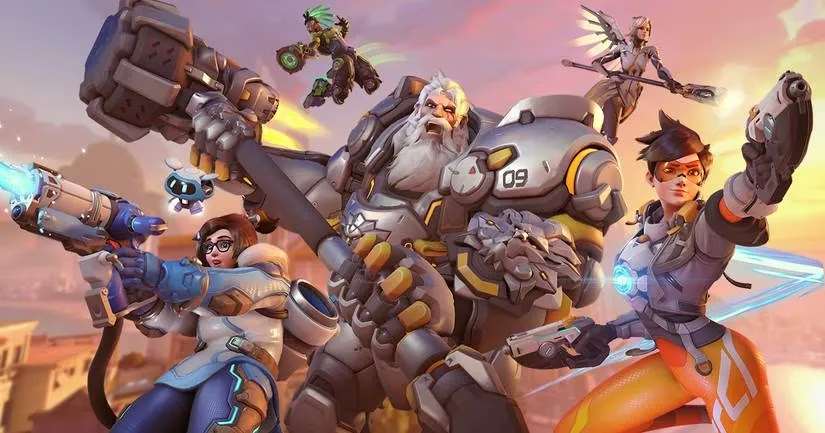
Now, half a decade later, the consequences of that day are easier to see. Overwatch 2 eventually launched in late 2022 and moved to a free-to-play seasonal model under Keller’s direction. New heroes, maps, and battle passes arrived far more regularly than in the game’s later Kaplan days. In that sense, Blizzard addressed one of the core complaints from the farewell era: content velocity.
Yet many longtime players still speak of Kaplan with a certain nostalgia. They remember the developer update videos, the honest explanations, and the feeling that someone genuinely understood what made the game special. Some argue that while Overwatch 2 has grown mechanically, it occasionally lacks the cohesive warmth that marked the early years.
Whether his departure was driven by burnout, creative differences, or simple restlessness, one truth remains. Jeff Kaplan left an unmistakable imprint on Blizzard, on hero shooters, and on the millions of players who found friendship inside Overwatch. In 2026, his name still sparks respect, gratitude, and more than a little longing for a time when the game’s heart felt most visible.
Comments