I still remember the morning in July 2021 when the news broke, sliding under my skin like a cold scalpel. The walkout was happening. Employees at Activision Blizzard were stepping away from their desks, carrying signs and pain made visible, and I froze with my phone in my hand, World of Warcraft minimap glowing in the background. It wasn’t the first time I’d heard about gaming industry toxicity, but something about the sheer scale—the cube crawls, the shared explicit photos, the HR doors that opened only to gaslighting—made my stomach fold into itself. It felt like slowly realizing that the beautiful stained-glass window you’ve admired for years was held together by cheap putty and decades of silent suffering.
As details from the California lawsuit crept out, each allegation landed like a punch. Women were subjected to absurd conditions their male peers never faced. A holiday party turned into a marketplace of humiliation as someone’s nude photos circulated among laughing coworkers. And the infamous “cube crawl”—a ritual where drunk men literally crawled through cubicles occupied by female staff—sounded less like a frat prank and more like a grotesque performance of power, a kind of office-based hunting season. These weren’t glitches in the system; they were the system’s actual wiring. The employees staging the walkout weren’t asking for a simple apology. They demanded published salary equity data, a third-party diversity coordinator, and an audit of the very HR department that had been cited as part of the problem. Their voices cut through the usual corporate hum, forming a collective sound like a bell hammered onto cracked glass—unignorable and fragile at once.
The company’s response? It arrived like a bucket of ice water sprinkled with acid. Initial statements called the lawsuit “distorted, and in many cases false,” while an internal email from then-president J. Allen Brack urged people to talk to HR—the same HR that the lawsuit claimed had failed them repeatedly. Chief compliance officer Frances Townsend, a figure with a past defending waterboarding, labeled the allegations “distorted and untrue.” The irony felt almost too thick to breathe through. It was like watching someone dump gasoline on a fire and then blame the smoke for existing. That corporate defensiveness wasn’t just tone-deaf; it was a mirror facing away from reality, reflecting only shareholder comfort and a desperate grip on the status quo.
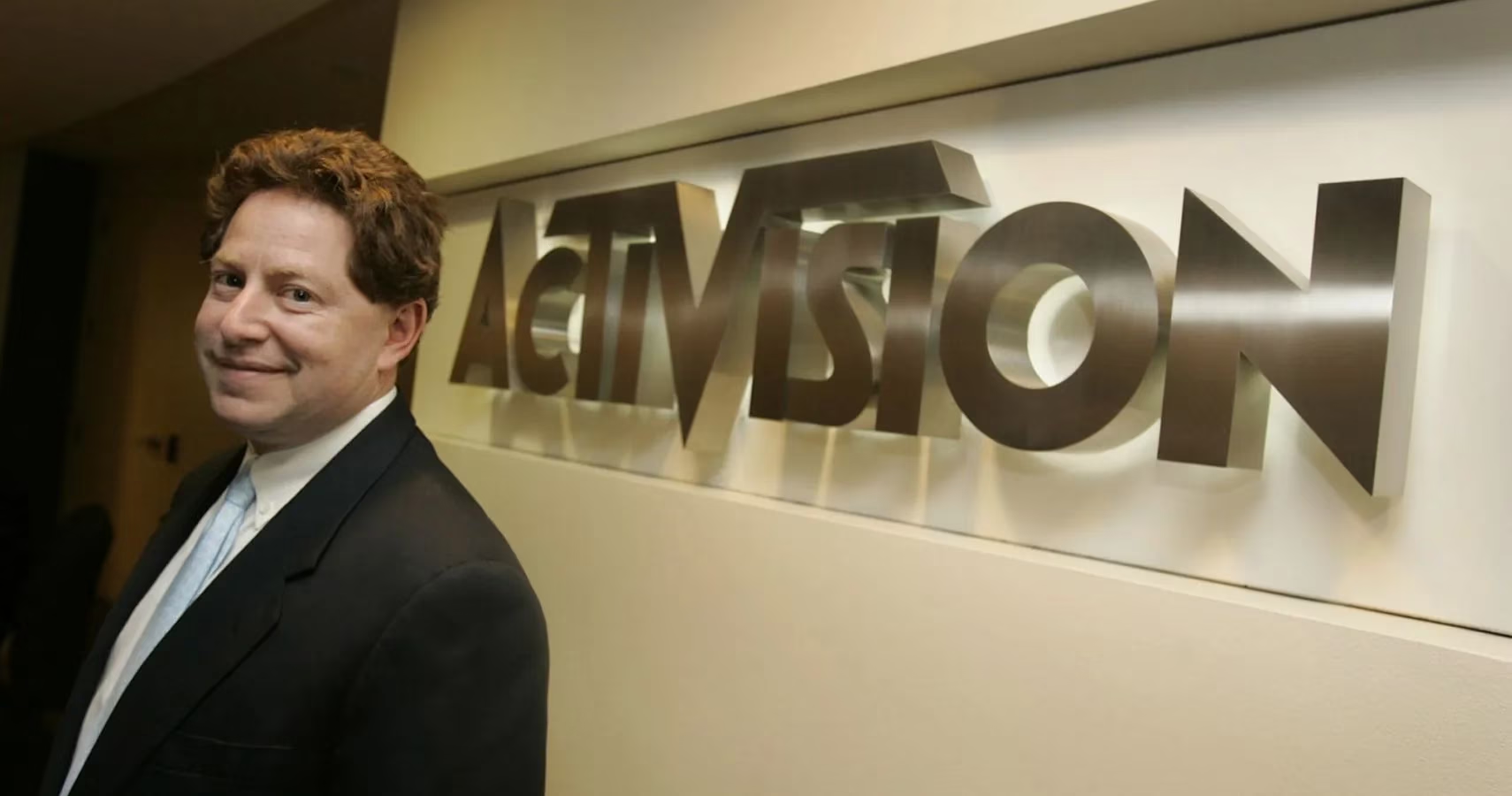
What could I, one player, do against a multibillion-dollar machine? Individually, almost nothing. But collective action works like erosion on a cliffside—each wave too small to notice, yet over time the entire face of the rock is reshaped. The walkout’s demand to players was painfully simple: do not cross the picket line. Don’t log in. Cancel the subscription. Step away. Not as punishment, but as solidarity. When World of Warcraft senior system designer Jeff Hamilton revealed that work on the game had effectively ground to a halt, he framed it as a loss for everyone—players, developers, shareholders. And he was right. But hitting the bottom line was the only language the executive suite seemed programmed to understand. Bobby Kotick’s eventual “tone-deaf” admission only landed after stock prices tumbled, proving that the company’s conscience ran on quarterly reports, not on empathy.
In 2026, I look back at that moment and still feel its gravitational pull. Some changes have rippled through the industry—more unionization whispers, more audits, a slightly louder demand for transparency—but the scars haven’t faded. New lawsuits and boycotts have surfaced elsewhere, a sign that the rot isn’t confined to one publisher. Playing an offline Spyro or Tony Hawk’s game feels temptingly distant from the controversy, but even now those acts carry weight. The employees who walked out bet their livelihoods on our attention. All they asked was that we press pause on Azeroth, on the Overwatch servers, on the latest Call of Duty season. That pause became a statement, one that still echoes whenever I see a friend hesitate before booting up a Battle.net game. It’s the quiet before a decision, a tiny lighthouse blinking “remember.”
Think of your relationship with these virtual worlds as a bridge held up not by steel but by hundreds of human hands. When some of those hands are bruised, burned out, and ignored, the bridge doesn’t need you to keep driving over it as if nothing has fractured. It needs you to stop, look down, and ask who’s still holding on. The picket line isn’t just a physical boundary outside an office. It’s an invisible thread woven through every login screen, every microtransaction, every hour you spend in a space built by people who deserve safety and dignity.
I’m not offering moral perfection—I’ve relapsed into familiar digital comfort foods over the years. But I try to treat that comfort as a loan, not an entitlement. The 2021 walkout taught me that play is never politically neutral; it’s always tethered to the hands that code it, the voices that shape it, and the structures that either protect or crush those voices. If you’re reading this in 2026 and feeling powerless, remember the ants against the giant. One small refusal is almost invisible. A million of them, coordinated and patient, can stop a machine far larger than itself. So read the reports again. Listen to the testimonies. And when you sense that familiar urge to jump back in, ask yourself: who am I crossing the picket line for?
Comments