When Blizzard first detailed Overwatch 2's competitive PvP, many fans expected the familiar 6v6 setup to carry over from the original game. Instead, the team revealed a move to 5v5, cutting one tank from each side and rebalancing the entire hero roster around that change. The decision was not just a small tweak. It touched every role, every map, and every match.
At the center of that announcement was the removal of the second tank slot. In the old 6v6 format, two tanks could stack shields and defensive abilities, leading to slow, bunker-style fights. Under the new 5v5 system, each team fields one tank, two damage heroes, and two supports. That single tank now has to manage space, absorb pressure, and create openings without a partner to cover mistakes. Players who enjoyed tanking suddenly found themselves carrying a much larger responsibility.
The change also brought a new game mode called Push. In Push, both teams fight over a neutral robot that moves a barricade toward the enemy base. The robot can be pushed back and forth, so progress is never permanent. A team that loses control can immediately reverse the situation. This tug-of-war style mode rewards aggression and quick rotations, which fits nicely with the faster pace of 5v5. Since the robot does not follow the same checkpoint logic as Escort, teams have to stay flexible for the entire match.
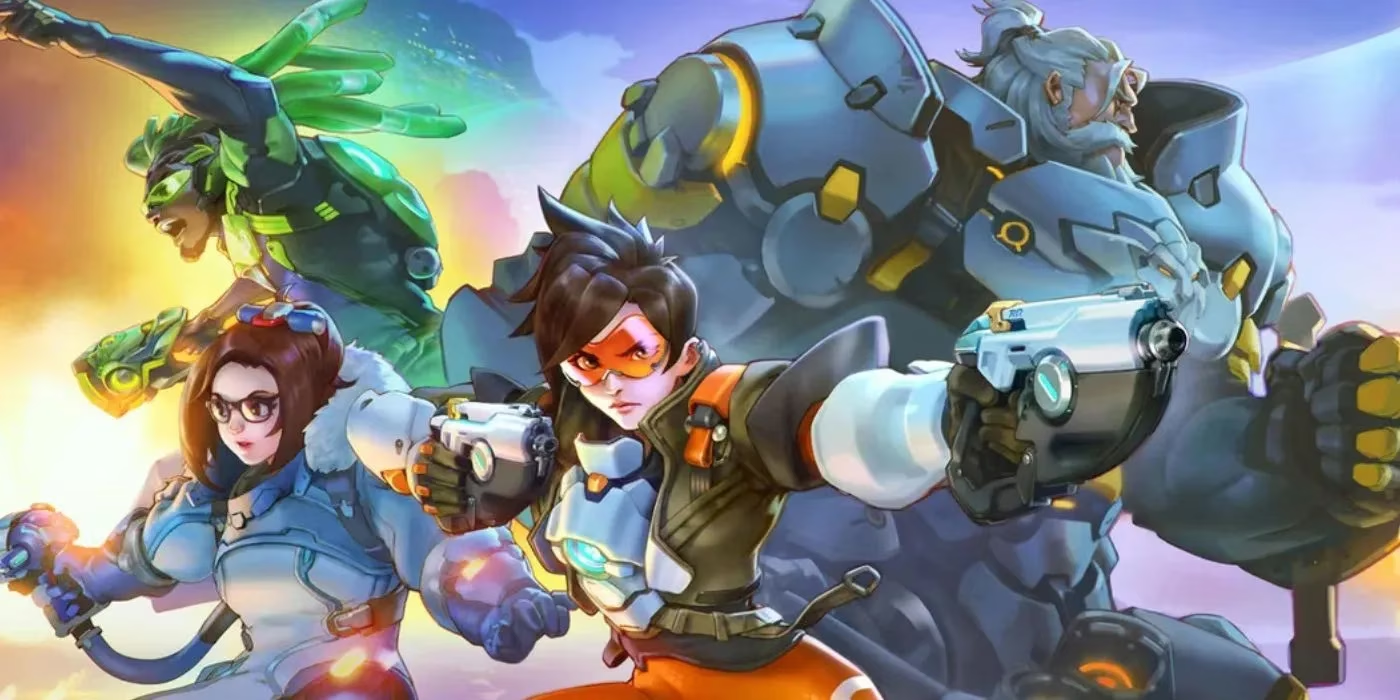
Blizzard also used the PvP reveal to show how tank heroes would change. Zarya received a significant update to her bubble shield. She now has two charges that can be used on herself or allies in any combination before recharging. That gives her more survivability and more chances to save teammates during dive-heavy fights. Reinhardt gained the ability to cancel his charge mid-animation, along with a second charge of Fire Strike. These adjustments make him more mobile and less likely to be punished for a bad charge. Winston received an entirely new alternate fire: a long-range lightning shot that can snipe enemies out of the sky. That new tool gives Winston players a way to pressure targets at range without giving up his core diving identity.
The table below shows a quick comparison between the original format and Overwatch 2's 5v5 model.
| Feature | Original Overwatch | Overwatch 2 |
|---|---|---|
| Team size | 6v6 | 5v5 |
| Tank slots | 2 | 1 |
| Damage slots | 2 | 2 |
| Support slots | 2 | 2 |
| General pace | Slower, shield-heavy | Faster, more aggressive |
| New objective mode | None | Push |
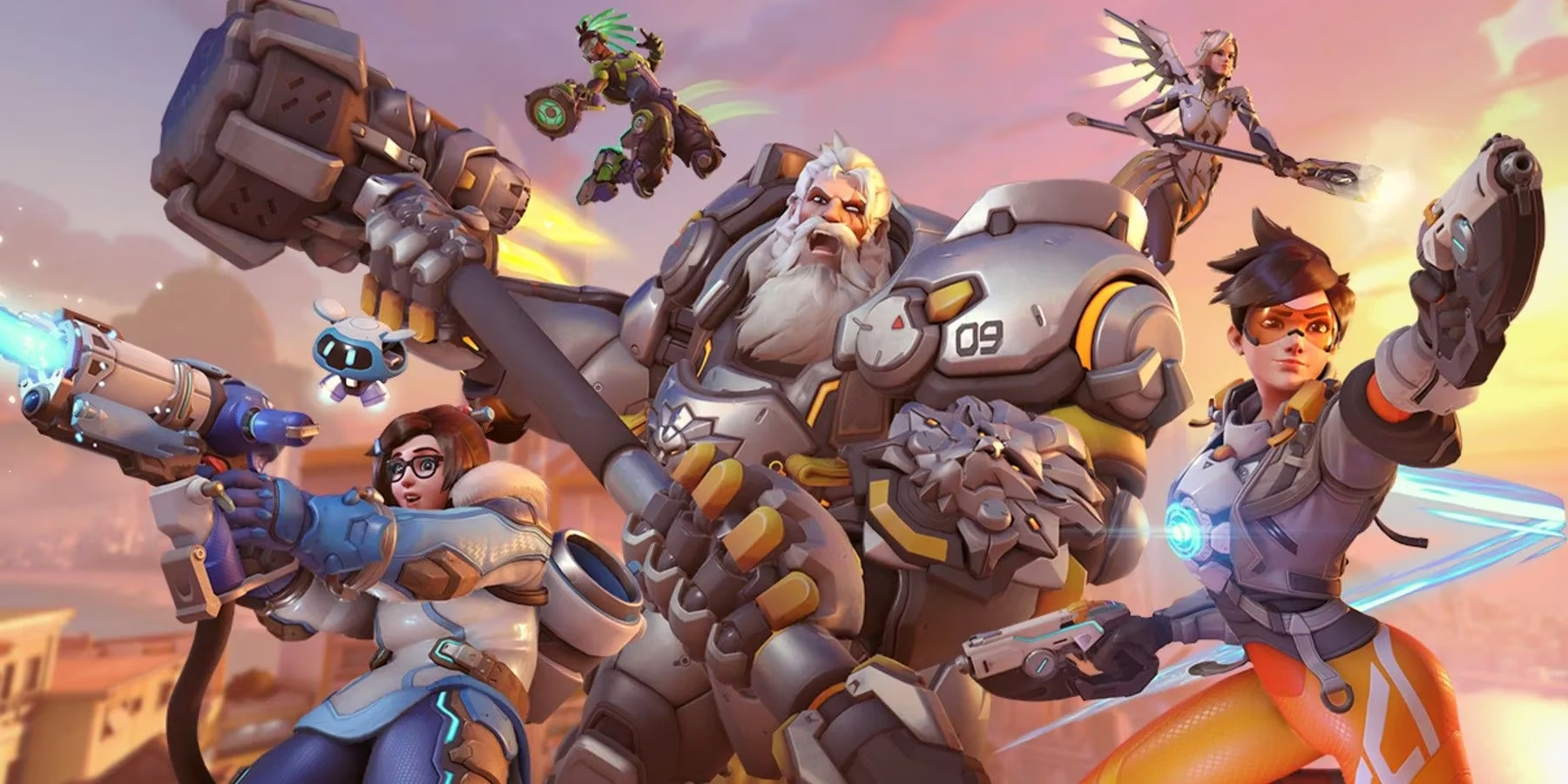
Removing a tank from each team has ripple effects beyond just the tank role. Damage players have more room to flank because there is only one shield to break. Support players have one fewer teammate to heal, but they also have to deal with more incoming pressure because fights open up faster. Certain heroes that struggled in the old barrier meta can shine in Overwatch 2. Dive-heavy compositions featuring heroes like Genji and Tracer become far more threatening when they do not have to chew through two tanks. Zarya's updated bubbles can support those aggressive dives by protecting a Tracer mid-fight or saving a Genji as he exits a duel.
On the other hand, tank players lost their safety net. In the old game, a Zarya could clutch-save an overextending Reinhardt, or an Orisa could cover a Roadhog's advance. In 5v5, those small rescues disappear. One bad decision from the tank can lead to a lost team fight almost immediately. Blizzard's answer was to make tanks more independent and more dangerous. That is why the reworks focus on added mobility, extra charges, and new ranged threats. A single tank has to feel like a threat without a second tank, and the updated abilities try to deliver that.
Push mode reinforces that philosophy. Because the robot can be pushed back and forth, teams cannot simply win one fight and then relax. They have to keep applying pressure. The mode also creates longer, back-and-forth battles where momentum can shift several times. In a 5v5 environment, losing one player is more punishing, so the mode naturally encourages teams to coordinate around their tank and supports. A team that overextends without its tank often loses control of the robot quickly.
Overall, Overwatch 2's transition to 5v5 was one of the most consequential decisions in the game's history. It changed hero design, competitive strategy, and the feel of every match. The old 6v6 experience was built around stacked shields and slow neutral fights, while the new model pushes for constant action. Tank players had to learn a different style, damage players found new opportunities, and supports adjusted to a faster, more fragile team. Push mode added another layer of unpredictability. Since that reveal, Overwatch 2 has continued to evolve, but the 5v5 foundation still shapes how players approach every match.
Comments