In 2026, a console player in Manchester queues for a Quick Play match in Overwatch 2. A PC friend in Toronto joins the group with a single click. This feels ordinary now. Yet rewind to 2021, and the feature was still a stubborn puzzle Blizzard had not solved.
Five years into the original Overwatch's life, Blizzard finally announced that crossplay was coming between PC, Xbox, PlayStation, and Switch. The move seemed natural for a shooter dependent on a huge online player base. But as it turned out, technical issues had blocked the path, and business concerns likely played a role too.
The feature was not live immediately. Blizzard only promised an Overwatch crossplay beta test in the near future and declined to speculate about a final launch date. For console players, participation required a Battle.net account if they did not already have one, plus a code to link their system. Crossplay would work universally only in non-Competitive modes. Competitive play would remain split into PC and console groups. Even outside Competitive, PC players would be excluded from the console matchmaking pool. A mouse and keyboard, Blizzard reasoned, gave them an automatic advantage. Cross-progression was another limitation. At launch, it would be impossible for all players.
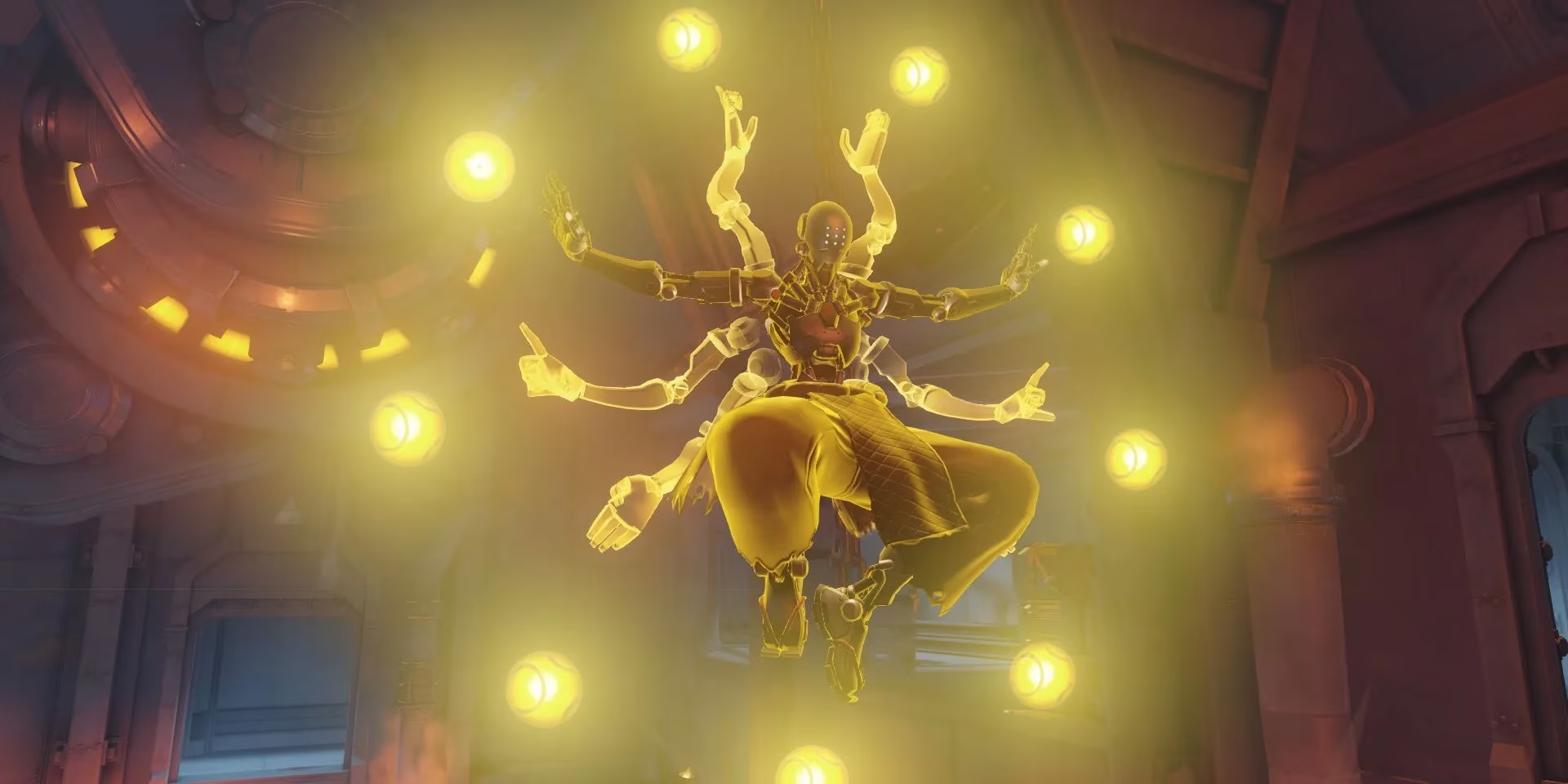
One key holdup appeared to be Battle.net itself. Until a recent update, the service lacked the needed account infrastructure. Console Overwatch owners had long been able to play without Battle.net. Crossplay changed that. An account became mandatory, whether new or existing. PC players had always signed up because Battle.net was how they purchased the game in the first place. The service was also required for other Blizzard titles such as Diablo 3 and World of Warcraft. In many ways, the crossplay rollout was an account migration disguised as a social feature.
Logistical and technical factors mattered too. PC users needed unique handling in crossplay games to keep matches fair without completely isolating them. Every platform carried its own software and hardware quirks, and developers had to smooth over each one. On top of that, business and licensing agreements occasionally blocked progress. Sony had long been the most notorious platform holder in this regard, resisting crossplay support for years. Reports suggested Sony was charging some publishers fees for crossplay. That might explain why PlayStation platforms were excluded from the feature in Borderlands 3. Overwatch was popular enough that Blizzard could justify the expense, but the negotiation was never free.
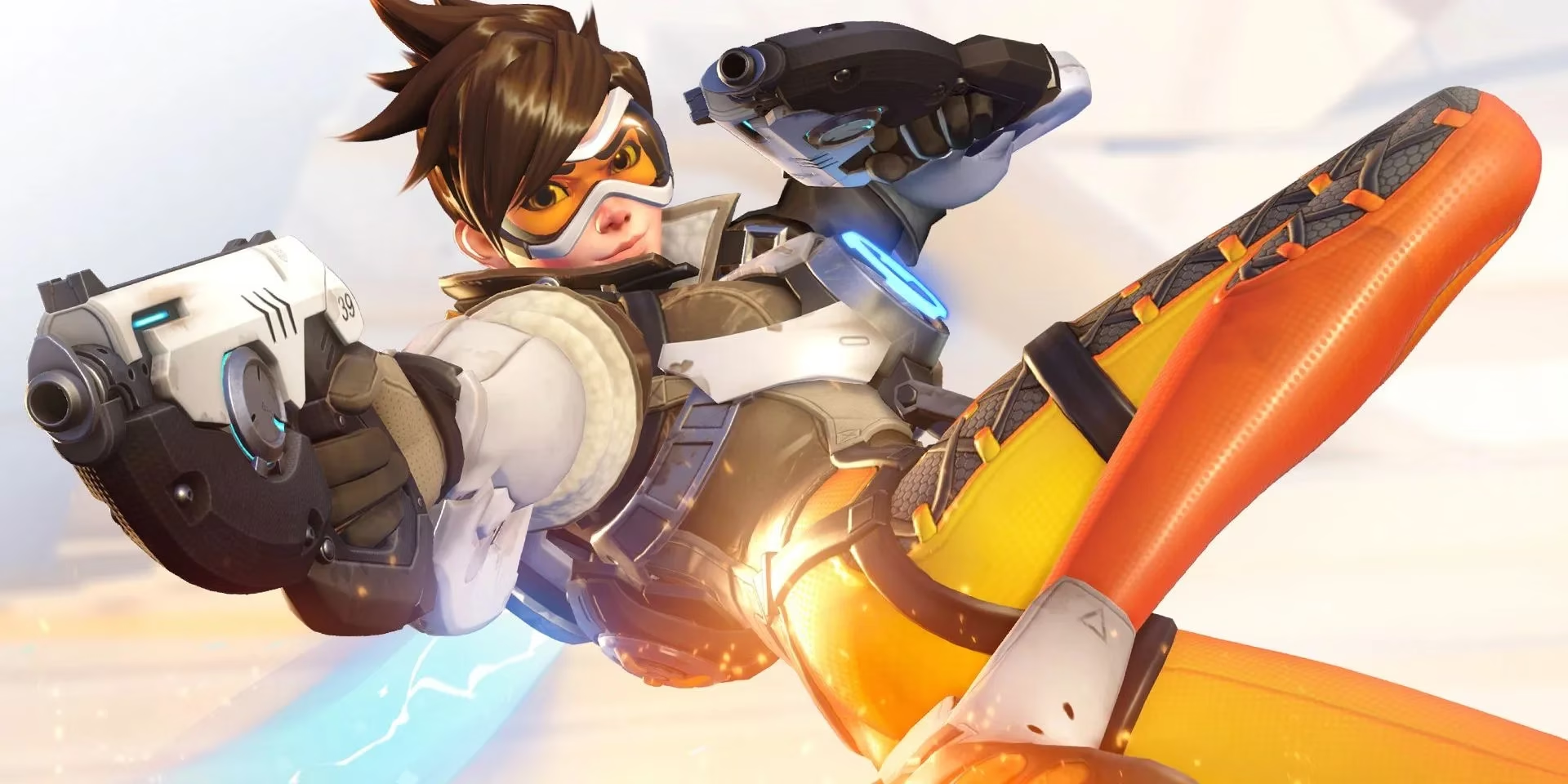
There was also a forward-looking reason for the timing. Blizzard may have been laying the groundwork for Overwatch 2. That game, likely shipping in 2022, would carry over progress and loot from the first title. It would allow owners of both games to play together in PvP matches. Players of the original Overwatch would miss out on PvE co-op play and graphics upgrades. Crossplay in the original game was not just a convenience. It was a test bed for the sequel's shared ecosystem.
By 2026, the landscape looks very different. The beta Blizzard teased has long since evolved into a standard feature. Crossplay now spans both Quick Play and Competitive modes in Overwatch 2, with careful input-based matchmaking rules that respect the differences between controller and mouse-and-keyboard players. Cross-progression, once impossible, now follows players across platforms through a Battle.net account. The infrastructure work begun in 2021 quietly became the foundation for a more connected player base.
What once seemed like a delayed feature now reads as a strategic pivot. Blizzard did not simply flip a switch. It rebuilt account systems, negotiated with platform holders, and prepared for a sequel. The result, in 2026, is a game where the platform logo matters far less than the player behind it.
Comments