As a long-time fan of the Overwatch universe, I still remember the excitement I felt when I first heard about the Overwatch: New Blood comic series. It was 2022, and the announcement came just as Overwatch 2 was about to launch, bringing our beloved team-based shooter back into the spotlight after years of anticipation. But what truly captured my imagination wasn't just the promise of new gameplay mechanics or flashy graphics—it was the opportunity to dive deeper into the stories of the heroes I'd been fighting alongside for years. The miniseries promised to explore how Cassidy, one of the original members, would rebuild the Overwatch team from the ground up. And now, as I look back from 2026, I realize how pivotal that moment was for the franchise's lore.
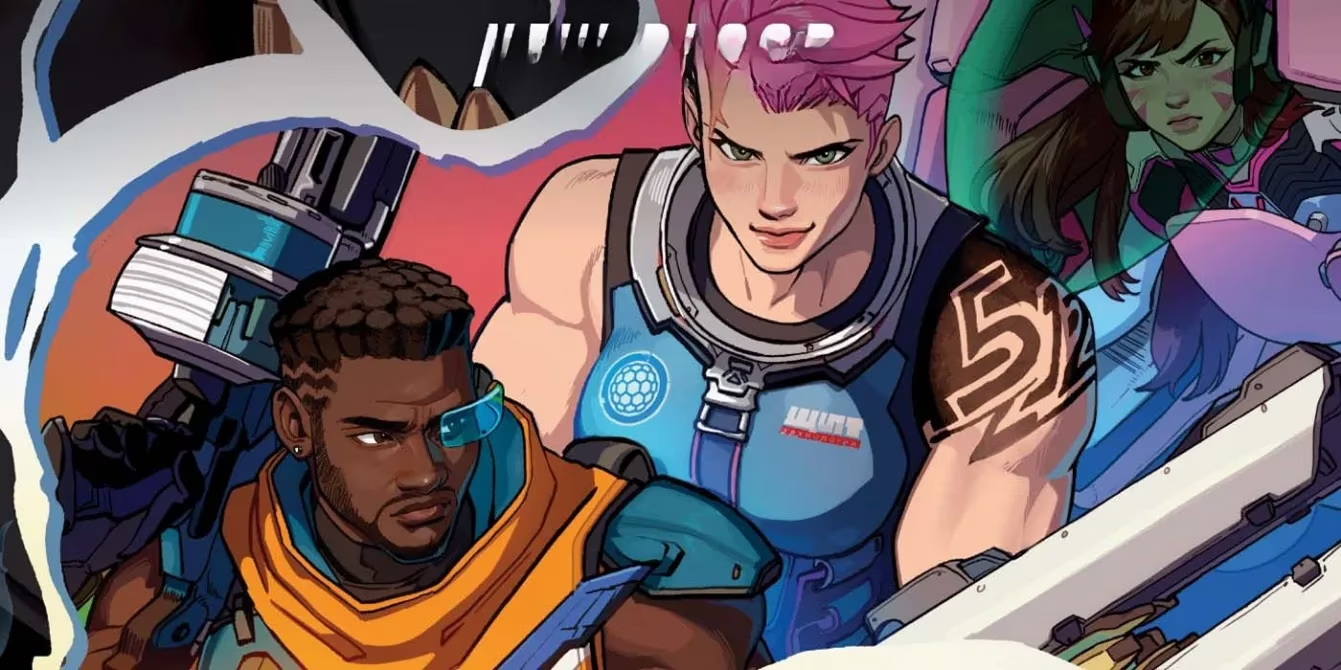
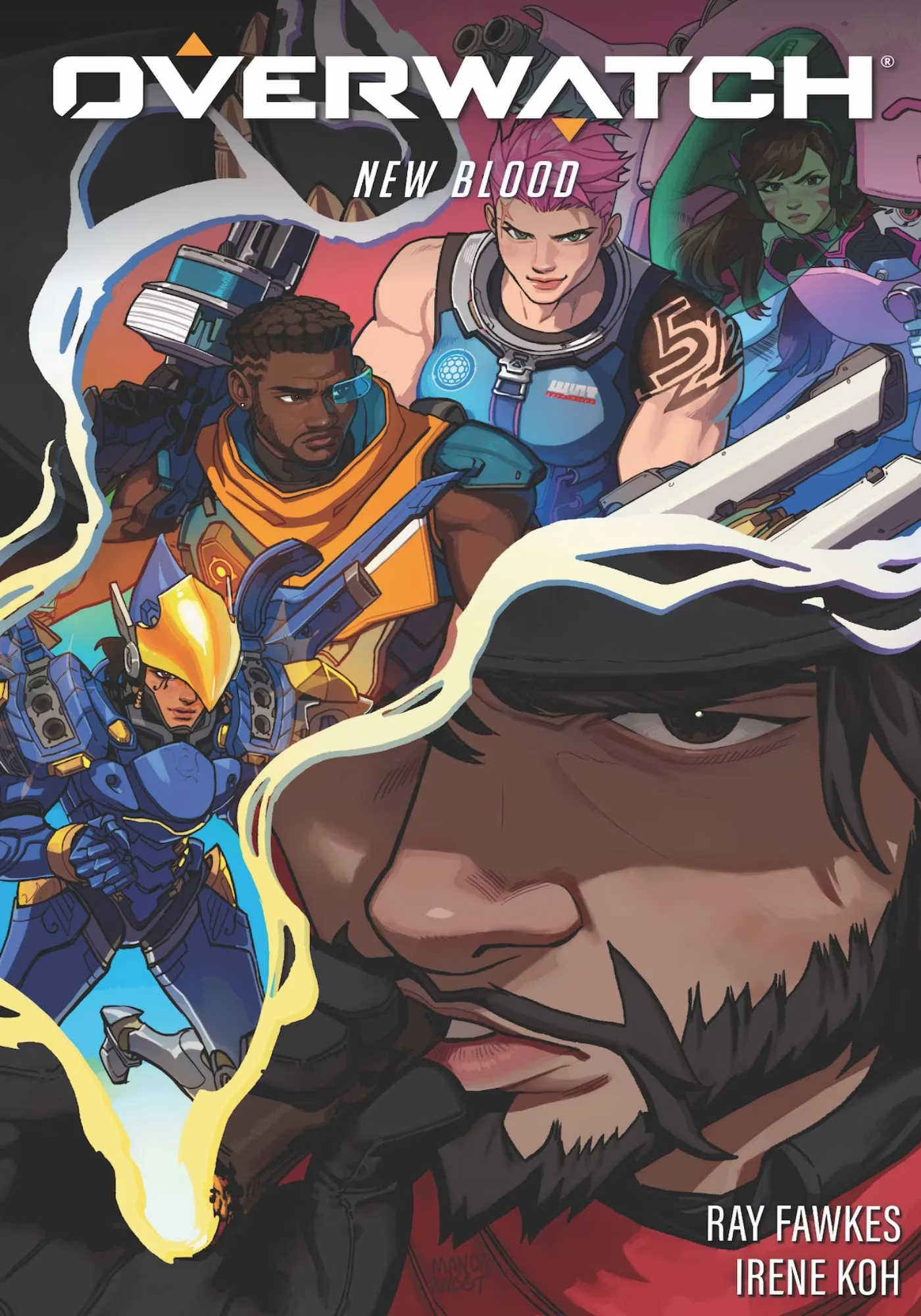
When I first got my hands on the hardcover collection of Overwatch: New Blood in March 2023, I was immediately struck by Amanda Schank's stunning cover art. There was Cassidy, standing tall with his signature cigar smoke curling around him—and within that smoke, the faces of his new recruits: Pharah, Baptiste, Zarya, and D.Va. It was a powerful visual metaphor, wasn't it? The old guard literally breathing life into the new generation. I spent hours just studying that cover, wondering about the journeys each of these heroes had taken to reach this point. What battles had they fought? What sacrifices had they made? And most importantly, what would convince them to join an organization that had been disbanded and vilified for years?
As I delved into the five-issue collection, I discovered that Ray Fawkes and Irene Koh had crafted something truly special. The story wasn't just about action-packed superheroics—though there was plenty of that—but about the personal struggles and moral dilemmas each recruit faced. I found myself particularly drawn to Baptiste's arc. Here was a former Talon operative, someone who had seen the worst of what the world had to offer, being asked to fight for the very ideals he'd once opposed. How could he trust Cassidy? How could he trust himself? These were questions that resonated deeply with me, especially in a world where redemption stories often feel rushed or unearned.
Reading New Blood in 2023 felt particularly timely because of the concurrent launch of Overwatch 2. The game was shifting to a 5v5 format, introducing new heroes like Sojourn and Junker Queen, and completely overhauling its progression systems with battle passes. But amidst all these changes, the comics provided something crucial: narrative continuity. They helped bridge the gap between the original game's lore and the new direction the franchise was taking. I remember thinking, "This is what separates Overwatch from other shooters." While competitors focused solely on gameplay mechanics, Blizzard and Dark Horse were building a living, breathing world where every hero had depth and history.
The timing of the hardcover release was perfect, arriving just as Season 2 of Overwatch 2 was being teased. As players speculated about the new tank hero, maps, and mythic skins, I found myself appreciating the comics even more. They reminded me that behind every character model and ability cooldown, there was a story waiting to be told. Zarya's struggle with her duty to Russia versus her commitment to global peace, Pharah's complicated relationship with her mother Ana, D.Va's transition from celebrity streamer to frontline defender—these weren't just backstory bullet points. They were fully realized character arcs that made the in-game interactions feel more meaningful.
Looking back from 2026, I can see how New Blood set the stage for everything that followed. The PvE mode that finally launched in 2023? It drew heavily from the character development established in these comics. The ongoing seasonal narratives that have kept players engaged for years? They owe a debt to the foundation laid by Fawkes and Koh. Even the latest hero additions to Overwatch 2 feel like spiritual successors to the New Blood recruits—characters with complex motivations who join the fight not because they're told to, but because they choose to.
What made the collection truly special, though, was how it captured a specific moment in Overwatch history. This was a team in transition, rebuilding after crisis. Cassidy wasn't just recruiting soldiers; he was building a family. And as I followed each issue, I began to understand that this was the core appeal of Overwatch's lore. It wasn't about superpowers or futuristic technology—it was about people from different backgrounds, with different traumas and different dreams, coming together to protect a world that didn't always deserve protection.
Now, three years later, I still occasionally pull my hardcover copy off the shelf. The pages are slightly worn from multiple readings, and the spine has that comfortable crease that only comes from love. When new players ask me about the lore—why Reaper hates Soldier: 76, what happened during the Omnic Crisis, how Talon operates—I always point them to New Blood first. Because while there are novels and animated shorts and in-game archives, this collection represents something fundamental: the moment Overwatch stopped being an organization and started being an ideal again.
In many ways, my journey with Overwatch: New Blood mirrors the journey of the recruits themselves. I started as an observer, curious but detached. Then I became invested, emotionally connected to these characters' struggles. And finally, I became an advocate, sharing their stories with others. The comics didn't just expand the Overwatch universe; they expanded my understanding of what makes a hero. Is it perfect aim or powerful abilities? Or is it the courage to change, to grow, to accept help when you need it most? As Cassidy's cigar smoke dissipates on that beautiful cover, the answer seems clear: sometimes, the strongest heroes are those who are still learning how to be heroes at all.
Comments