The landscape of team-based shooters is about to shift dramatically. As we move further into 2026, I find myself looking back at the pivotal moment when Blizzard fundamentally changed the business model for one of its flagship franchises. The announcement that Overwatch 2 would adopt a free-to-play model was a seismic event, confirming the swirling rumors and setting a new course for the game's future. This wasn't just an update; it was a complete reimagining of how players would engage with the world of Overwatch, moving away from the traditional upfront purchase to a live-service approach designed for longevity and constant evolution.
A New Era Begins: Early Access and Core Changes
The journey officially began with the Early Access launch on October 4th. But what did this new free-to-play structure actually mean for players? For veterans like myself, it meant our original game libraries and progress carried forward, a crucial decision that respected the investment of the existing community. For newcomers, it removed the single biggest barrier to entry: the price tag. The core 5v5 PvP experience, featuring reworked heroes and new maps, became instantly accessible to everyone.
The shift to a seasonal model brought with it the now-familiar Battle Pass and an in-game shop. This was Blizzard's answer to sustainable development—offering a continuous stream of content funded by cosmetic purchases and the optional Premium Battle Pass. It was a gamble: would players accept this new economy? The initial reception was mixed, but the sheer influx of new players suggested the core appeal of Overwatch's gameplay was strong enough to withstand the business model transition.
Meet the New Champions: Junker Queen and Sojourn
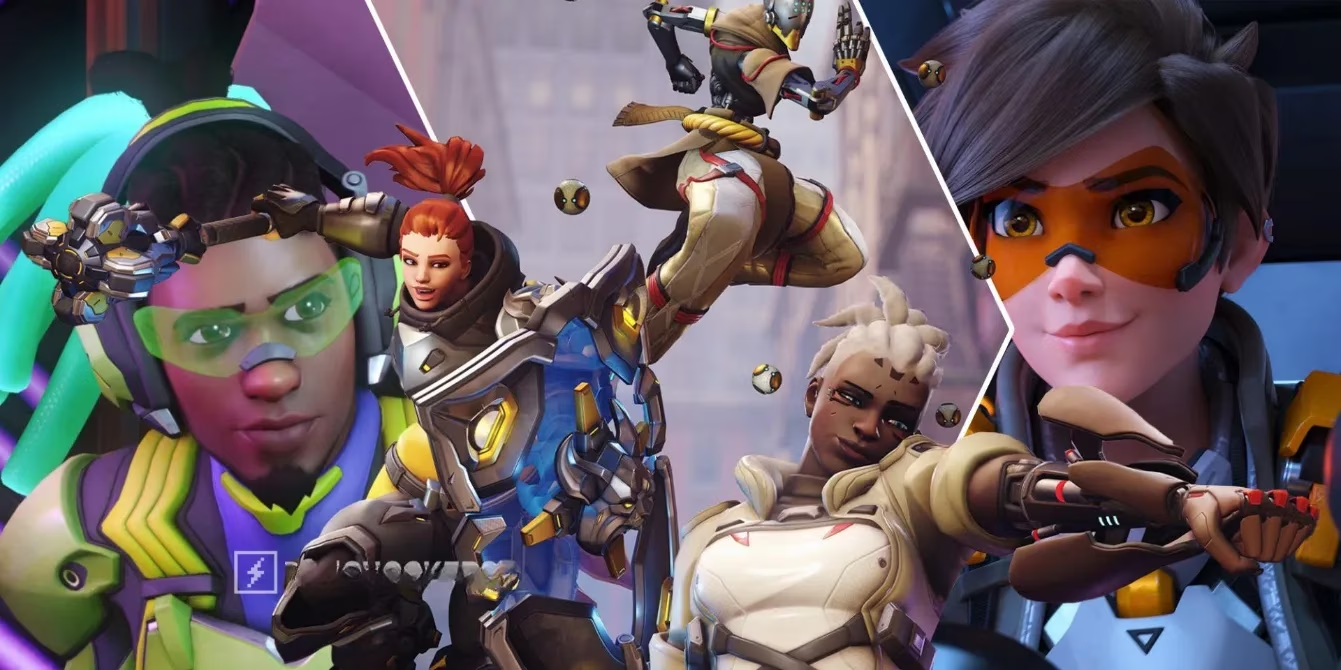
A new era demanded new heroes, and Blizzard did not disappoint. The reveal of Junker Queen was a masterclass in character design. Was she just a brute with an axe? Far from it. This fierce ruler from the Australian Outback brought a unique, aggressive tank playstyle centered on wounding enemies and sustaining herself through the ensuing chaos. Her commanding presence and scrappy toolkit immediately carved out a niche in the meta.
She wasn't alone. Sojourn, the Canadian former Overwatch captain, made her official playable debut. Many of us had seen glimpses of her in earlier cinematics, but finally taking control of her railgun was a revelation. Her ability to seamlessly switch between rapid-fire projectiles and a devastating high-impact shot required precision and game sense, offering a high-skill ceiling that appealed to dedicated damage players. These two heroes exemplified the new direction: distinct personalities backed up by impactful and innovative gameplay mechanics.
The Xbox Connection and the PvE Promise
One of the more intriguing aspects of the announcement was its venue: the Xbox & Bethesda Showcase. Given the protracted and complex process of Microsoft's acquisition of Activision Blizzard, which faced significant regulatory hurdles, this appearance was a bold statement. It signaled a deepening partnership and hinted at future integrations, perhaps even day-one launches on Game Pass. For console players, it raised exciting questions about the game's ecosystem and potential cross-platform benefits.
Yet, the most ambitious promise lingered on the horizon: the PvE (Player vs. Environment) Hero Missions. The showcase was notably silent on this front, and rightly so—this narrative-driven, co-operative experience was a massive undertaking. The developers were clear that this story-focused content was still in deep development and would not be available at the Early Access launch. This decision, while disappointing to some, demonstrated a commitment to getting it right rather than rushing it out. It created a compelling long-term roadmap, positioning PvE as the next grand chapter rather than a launch feature.
The Verdict: A Foundation for the Future
Looking back from 2026, the Early Access launch of Overwatch 2 was less of a finished product and more of a foundational reset. It successfully rebuilt the player base by going free-to-play and refreshed the core PvP gameplay. The introduction of Junker Queen and Sojourn expanded the tactical possibilities, while the seasonal model established a framework for continual updates.
The unanswered questions—the full scope of PvE, the final form of the in-game economy, and the depth of platform integration—became the driving forces for the years that followed. By choosing transparency about what was not ready, Blizzard managed expectations and framed Overwatch 2 as an evolving platform. The move to free-to-play was risky, but it ultimately ensured that the fight for the future would have the largest possible audience. The battle began not with a purchase, but with a simple download, and the world of Overwatch has been forever changed because of it.
Comments