The year 2022 was a crypt full of whispers for the Overwatch faithful. After Blizzard's grand 2019 unveiling of Overwatch 2, the silence that followed stretched across months like a shadow slowly swallowing a sundial. Then, like a flare shot across a dark sky, an April beta was announced, and the community’s hunger turned into a voracious scramble for keys. Fans had not tasted a new damage hero since Echo joined the roster nearly two years prior, and the promise of Sojourn felt like the first clean rain after a long drought.
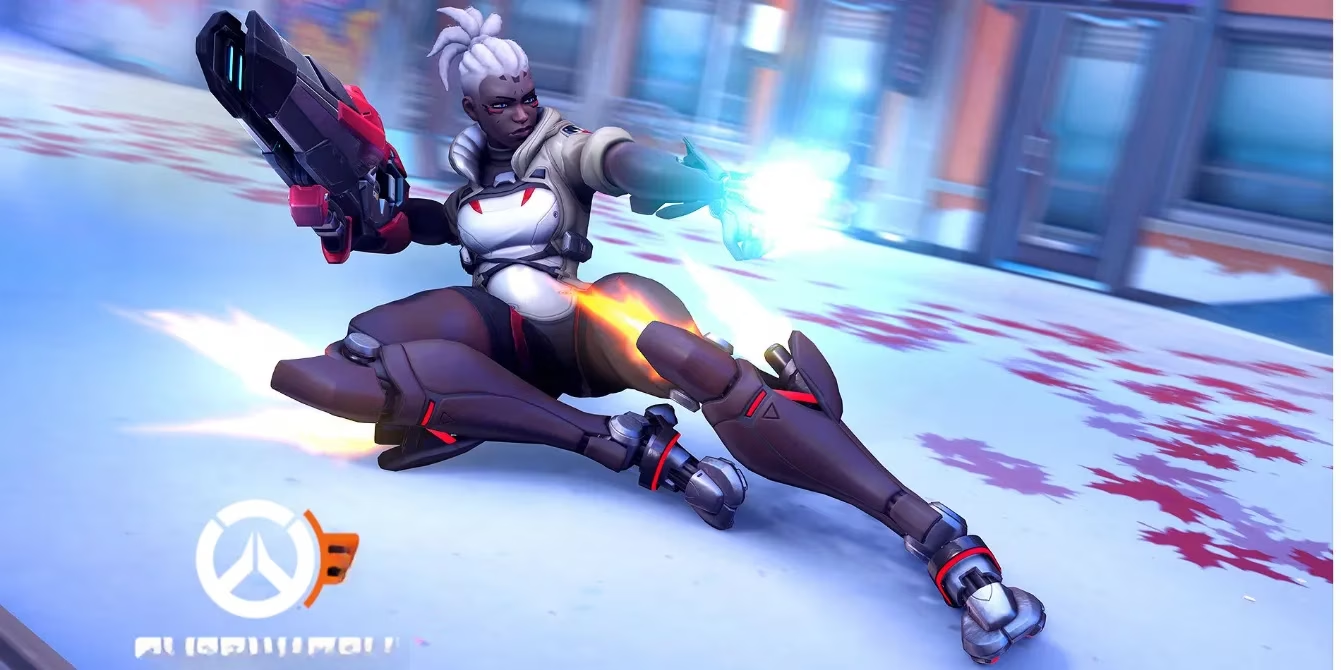
Sojourn emerged as more than just the 33rd hero; she was a symbol of the sequel's ambition. Described initially as a damage sniper with a railgun, her cybernetic precision and fluid mobility teased a new rhythm of combat. The beta offered a hands-on taste of her charged shot mechanics, which rewarded tracking and timing — a dance of patience and sudden lethality. Watching her slide into a charged headshot was akin to a falcon folding its wings before a terminal dive, compact power exploding in a single, decisive instant.
That April also delivered the Push game mode, a tug-of-war that turned the traditional payload formula on its head. Instead of one-sided escort missions, Push asked teams to grapple over a robot that shuttled barricades across symmetrical maps. The new Toronto and Rome maps became theaters of chaotic back-and-forth, where a single overtime clutch could feel like holding a wave at bay with bare hands. Alongside these, reworks for Orisa, Doomfist, Bastion, and Sombra signaled that Blizzard was not merely painting over the old framework but disassembling it and rebuilding with sharper angles. Orisa lost her barrier and gained an aggressive, javelin-hurling kit, transforming her from a stationary anchor into a charging bull of disruption.
The beta's sign-up servers buckled under the flood of traffic, a modern echo of ancient pilgrimage routes clogged by the devout. Yet behind the excitement hung a ghost: the full PvE campaign and customizable hero abilities were still a distant shore, with Blizzard indicating the complete package would not drop until 2023. The partial reveal was like being handed a key to a treasure chamber but told the main vault would open later. Still, the 2022 Overwatch League season running on an early Overwatch 2 build meant pro players and internal testers were already sculpting the meta before the public could even log in.
Now, standing in 2026, the thread of history looks almost woven by design. The final game launched in August 2023 with its PvE story missions — seven chapters that delved into the Null Sector uprising and the fractured alliances within the new Overwatch. Customizable talents elevated hero progression from a mere cosmetic grind to a playground of build-crafting, letting Reinhardt freeze enemies or Genji chain lightning. The later expansions, such as Invasion and Ascension, layered in deeper lore and co-op raids that demanded the kind of synergy once reserved for six-stack competitive queues.
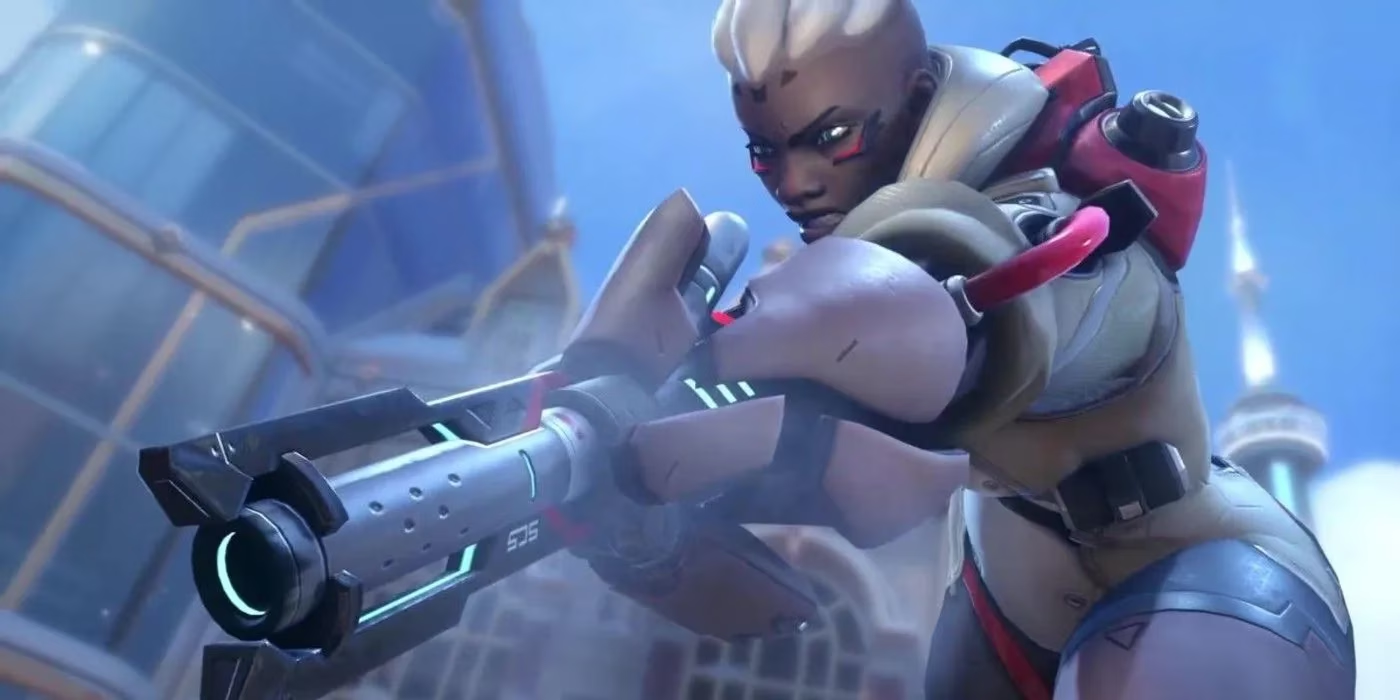
The competitive scene evolved into a blistering ecosystem. By 2026, Overwatch 2 has hosted two World Cups and a reimagined Champions Circuit, with teams flexing around Sojourn’s refined railgun, a Junker Queen’s commanding shout, and the dual-form terror of Ramattra. The original 6v6 format became a ghost of memory — 5v5 had been the new standard since launch, making every individual play heavier, every death a deeper cut. Like a chessboard reduced to five pieces per side, the strategy turned from broad fronts to lightning thrusts and desperate gambits.
The map pool has grown to over 30 distinct arenas, including later arrivals such as the storm-battered Paraíso research station and the neon-throated alleys of Goma. Each new Push map continued to refine the mode’s cadence, while the hybrid and escort maps absorbed lessons from years of player pathing data. The community’s appetite for lore was fed not only by cinematic shorts but by in-game events that altered the world in real time — seasonal anomalies, Null Sector incursions, and the long-awaited Omnic uprising scale battles that spun directly out of the campaign.
By mid-2026, the roster has swollen past 40 heroes, each still receiving periodic re-evaluations. The experiment with skill trees in PvE bled into a limited-time competitive mode called “Forge” where players could apply curated talent sets — a nod to the 2022 dreams of customization that finally crystallized. Even the controversial decision to delist the original Overwatch in 2024 now feels like a necessary, if painful, evolutionary step, much like a snake shedding its skin to grow.
Looking back from 2026, the April 2022 beta was not just a preview; it was the ignition of a marathon that Blizzard would run through criticism, development delays, and a shifting live-service landscape. The journey from that feverish sign-up scramble to today’s polished, sprawling experience mirrors the arc of a tree planted in shale — initially fragile, thirsting for sun, then expanding into a grove that draws travelers from distant lands. Overwatch 2 now stands as a testament to iterative reinvention, and the echoes of those first Sojourn headshots still resonate in every Railgun kill feed that lights up the contemporary battlefield.
Comments