The year is 2026, and the colossal esports coliseum that is Overwatch 2 now hums with the polished rhythm of dozens of post-launch seasons, sprawling hero reworks, and map rotations that have become gospel. Yet every veteran still speaks in hushed, reverent tones of a distant seismic event that unfolded in April 2022. They speak of the first PvP beta—a furious 21-day pressure cooker that shattered the 6v6 mold and gave birth to a ferocious 5v5 landscape. When the beta servers flickered to life on April 26, a record-breaking 1.5 million viewers flooded Twitch, their collective roar rattling the very foundations of the internet. What emerged from that crucible was not just a sequel, but a pantheon of heroes so monstrously effective that they bent the meta around themselves like neutron stars warping spacetime. To comprehend the Overwatch 2 we know today, one must understand the beta titans who once strode across Push maps like invincible gods.
The beta didn’t simply tweak numbers; it performed a brutal surgical excision of an entire tank slot. Teams shrank to five players, and the lone tank became simultaneously a frontline bulwark and a solo initiator—a schizophrenic role that broke lesser heroes like dry twigs. The new role passives, a cascade of out-of-combat regeneration for supports, anti-knockback tenacity for tanks, and a humming movement speed boost for damage heroes, functioned as the genetic rewrite that separated apex predators from evolutionary dead ends. It was in this cauldron that certain heroes ascended to an almost mythical status, becoming more essential than oxygen itself.
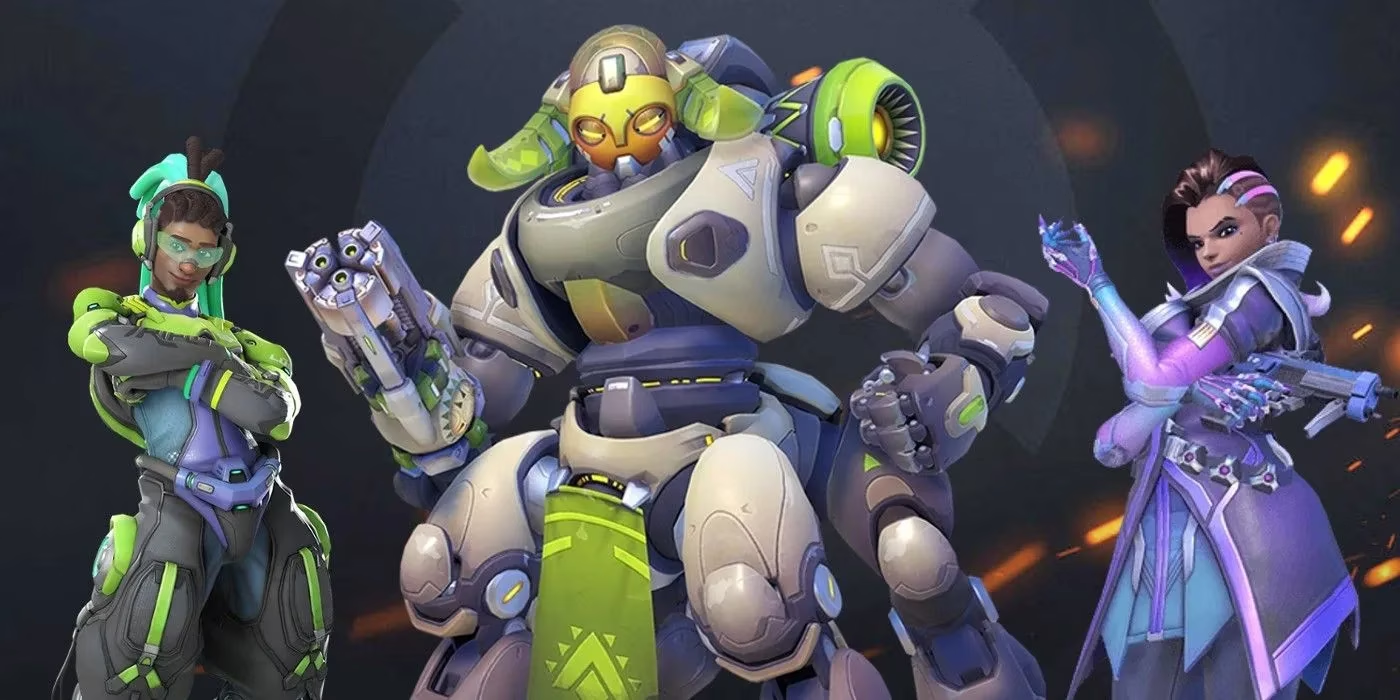
In the support category, the absence of an off-tank meant healers could no longer cower behind a double barrier; they had to become self-sufficient duelists with the survival instincts of cornered honey badgers. The hero who exemplified this new breed was Lúcio, whose wall-riding virtuosity transformed him into a green blur of perpetual motion. His Speed Boost became a sonic jetstream that propelled his team across the battlefield like a hypersonic fighter squadron, while his AoE healing pulsed outwards like a benevolent heartbeat. Lúcio’s ultimate, Sound Barrier, could swallow enemy assaults whole, a protective cocoon that turned coordinated dives into pitiful mosquito bites. He didn’t merely support his team—he conducted their every movement with the baton of a manic maestro.
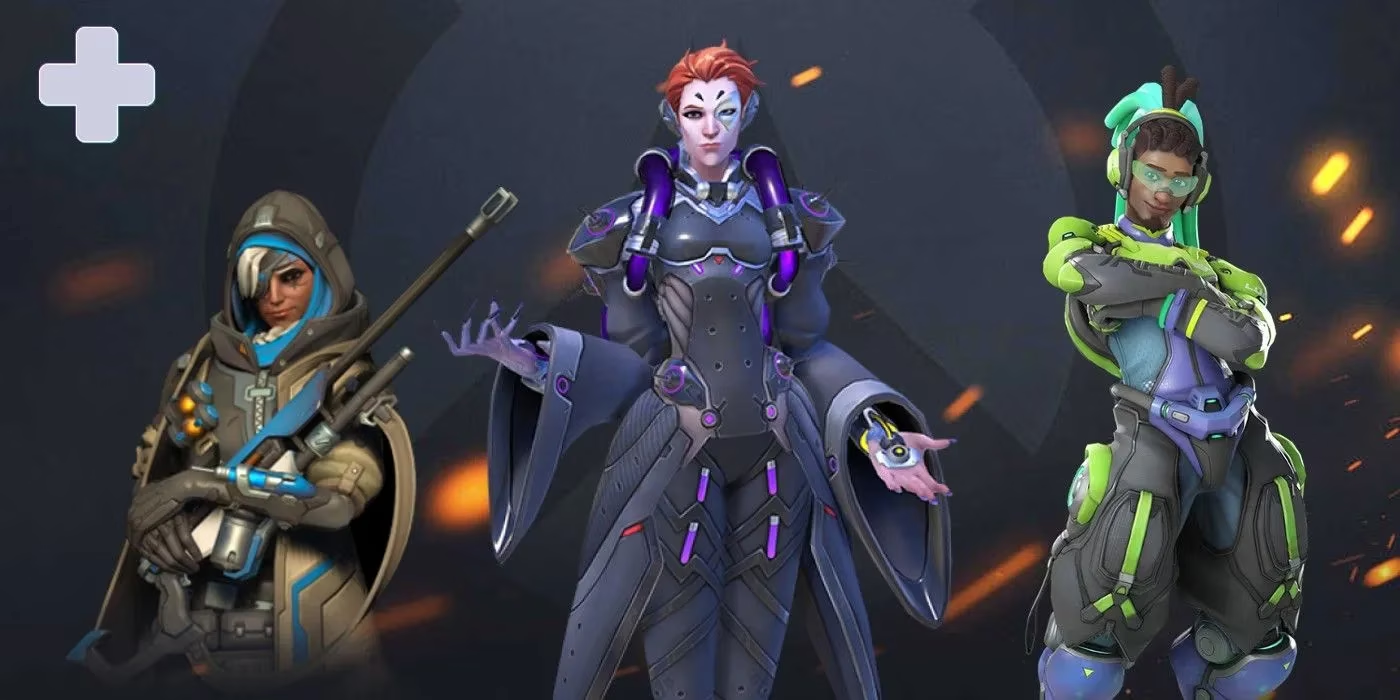
Right alongside him, Moira emerged from the shadows as a terrifying biotic reaper. The support role passive was a godsend for her, triggering health regeneration the instant she vanished into Fade, so that she rematerialized with renewed vitality as if reborn from her own afterimage. Moira in the beta became a self-sustaining tempest, draining flankers dry with her Biotic Grasp while spraying cascades of golden healing mist to turn allies into walking fortresses. Her playstyle was an exquisite paradox: she was a vampire-physician who could bleed the enemy backline and simultaneously stitch up her own team’s wounds mid-chaos. Ana, though still a powerhouse with her sleep dart—one of the few remaining stun capabilities in the game—and her anti-healing Biotic Grenade that melted solo tanks like acid on parchment, demanded pinpoint accuracy and lacked the slippery grace of her contemporaries. The beta’s verdict was stark: mobility and self-peel were the new currencies of survival, and Lúcio and Moira were the central bankers.
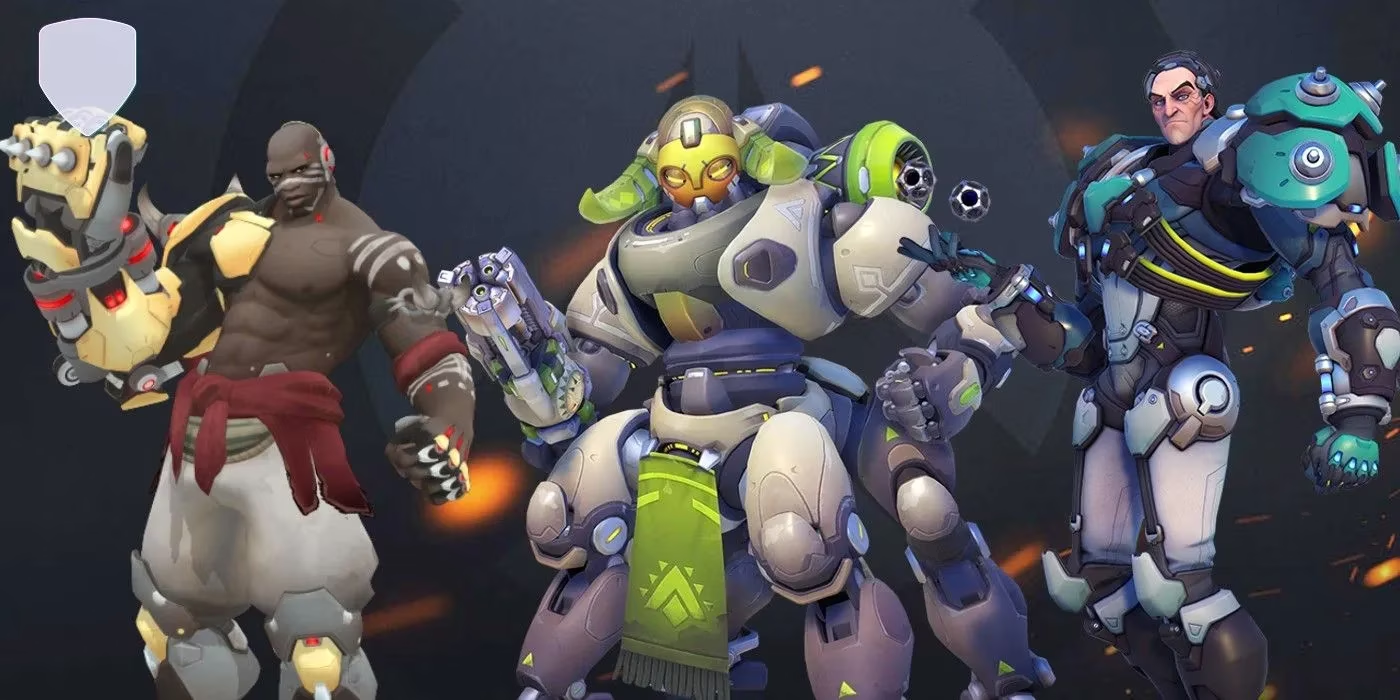
The solo tank role was a crucible that tested every ounce of a hero’s fortitude. The strongest tanks were not mere damage sponges; they were walking apocalypses. At the summit of the tank pantheon sat Orisa, no longer a static shieldbot but a relentless battering ram of destruction. Her rework turned her into a centaurian engine of war. The new Energy Javelin was a thunderbolt that could cancel enemy ultimates mid-cast, sending would-be assassins tumbling backwards like ragdolls. Her Javelin Spin devoured incoming projectiles and hurled aggressors aside with the force of a tornado, while her ultimate, Terra Surge, was a gravitational abyss that yanked enemies out of position and pulverized them with lethal pulses. Orisa’s Fortify granted her the tenacity of an entrenched fortress, making her a frontline so immovable she seemed to exist on a different geological timeline. She was not just a tank; she was an ideology of relentless forward pressure.
Yet Orisa had a rival in the form of Doomfist, now reclassified as a tank and functioning like a seismic wrecking ball wrapped in political fury. His Power Block absorbed frontal damage and charged his Rocket Punch to devastating levels, a kinetic transaction that rewarded bold aggression with monumental crowd control. Doomfist’s retained ultimate, Meteor Strike, landed with the force of a de-orbited satellite, dealing 300 center damage—a number so absurd for a tank that it felt like a clerical error in the fabric of balance. He could leap across sightlines like a ballistic missile, disrupt enemy lines, and evaporate squishy targets before they realized the sky had an in-built grudge against them. Sigma stood as the third titan, a floating astrophysicist who played a cerebral brawling game, juggling his Experimental Barrier and Kinetic Grasp to absorb infinite punishment while hurling hyperspheres that chunked health bars like falling boulders. But even his galaxy-bending brilliance was outshone by the raw, unrepentant dominance of Orisa and Doomfist.
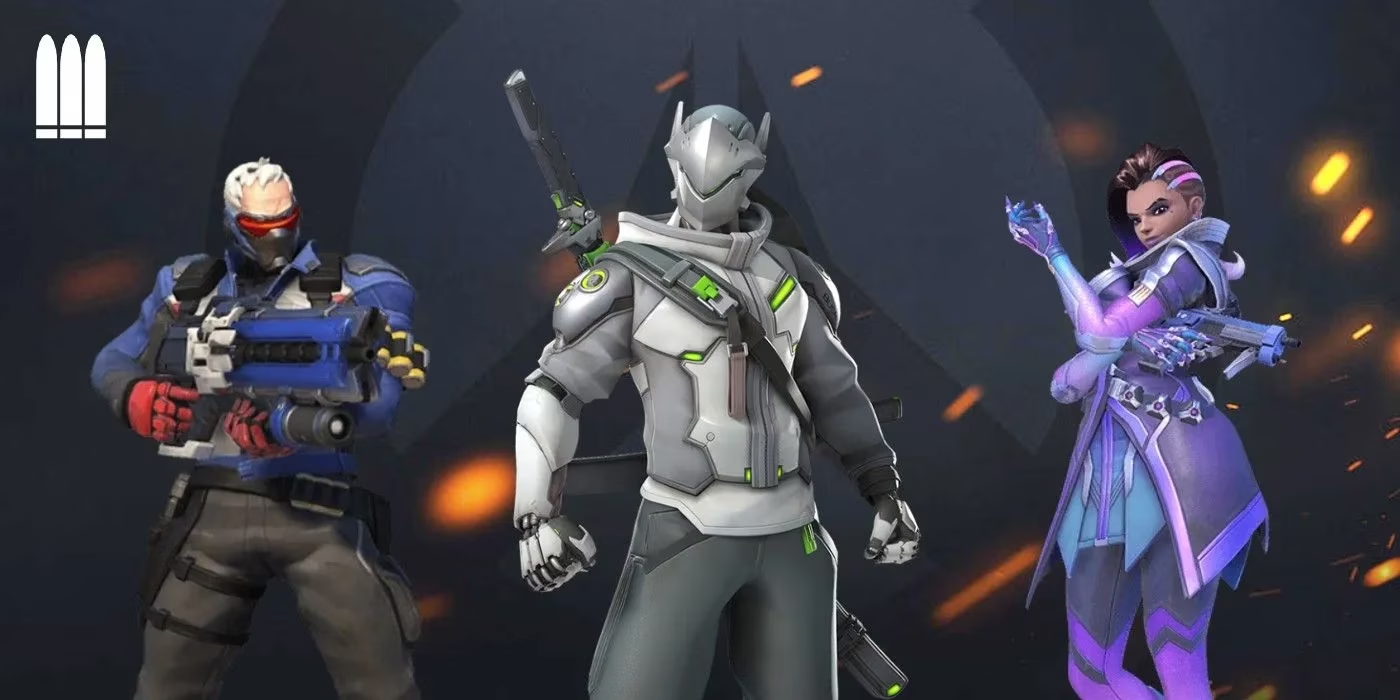
The damage role, blessed with an inherent movement speed passive, became a playground for flankers who could exploit the missing off-tank and pick off supports darting across the newly widened battlefields. Soldier 76, the quintessential everyman soldier, transformed into a relentless sprinting turret of death. His Heavy Pulse Rifle spat consistent damage, his Helix Rockets delivered instant burst, and his Biotic Field offered self-sufficiency that made him a roaming one-man army. In a beta starved of barriers, Soldier’s Tactical Visor turned into a point-and-click execution device, mowing down unwary supports who strayed an inch beyond cover. He was the ghost of simpler FPS days given superhuman speed, and opponents learned to fear the sound of his mechanical sprint like the hiss of a descending bomb.
Sombra’s redesign elevated her to a digital phantom slipping through the firewalls of enemy coordination. Her Hack no longer broke invisibility, meaning she could wander the battlefield permanently cloaked, a ghost in the machine who appeared only to twist the knife. Once hacked, targets took 40% increased damage from her Machine Pistol—a damage amplification so savage it reduced tanks to shredded metal and supports to crimson mist. Sombra became the incarnation of paranoia, a constant threat that forced the enemy team to spin in nervous circles, never knowing when the shimmer at the edge of their vision would erupt into catastrophic silence. Genji, equally benefitted by the removal of most stun abilities, danced through teamfights like a blade of light. His Dragonblade was no longer a gamble against a Flashbang; it was an assured symphony of decapitations. Without stuns to chain him, Genji’s mobility made him an untouchable assassin, deflecting bullets with cybernetic grace and carving through backlines with the precision of a surgeon’s scalpel dipped in lightning.
Sojourn, the newly introduced damage hero, was anticipated to be the overpowered centerpiece, but she was outshone by these veterans who had received fresh coats of meta-defining paint. The strongest team composition coalesced into a terrifyingly mobile war engine: Doomfist as the tanky thunderclap, Lúcio and Moira as the indomitable support duo, and Soldier 76 and Genji as the twin blades of flanking mayhem. This lineup didn’t just play the map; it consumed it, racing between objectives like a pack of cybernetic cheetahs and leaving the enemy team choking on dust and regret. When the beta closed its gates on May 17, it left behind a transformed playerbase and a blueprint for the chaos that would unfold over the following years. The heroes crowned in that 2022 crucible became the legends against which every subsequent balance patch would be measured, their dominance echoing into the 2026 meta like a haunting, glorious refrain.
Comments