As Overwatch 2 continues to evolve in its post-launch era, few heroes have sparked as much conversation and controversy as Sombra. The once-niche hacker has undergone a profound transformation, emerging from the shadows of situational utility to become a dominant force in the game's 5v5 landscape. Her reworked abilities have fundamentally altered her role, shifting her from a disruptive annoyance to a lethal assassin capable of single-handedly dismantling enemy teams. This newfound power has positioned her not just as a viable pick, but often as a mandatory component of a winning team composition, leading to widespread discussion within the community about the state of game balance.
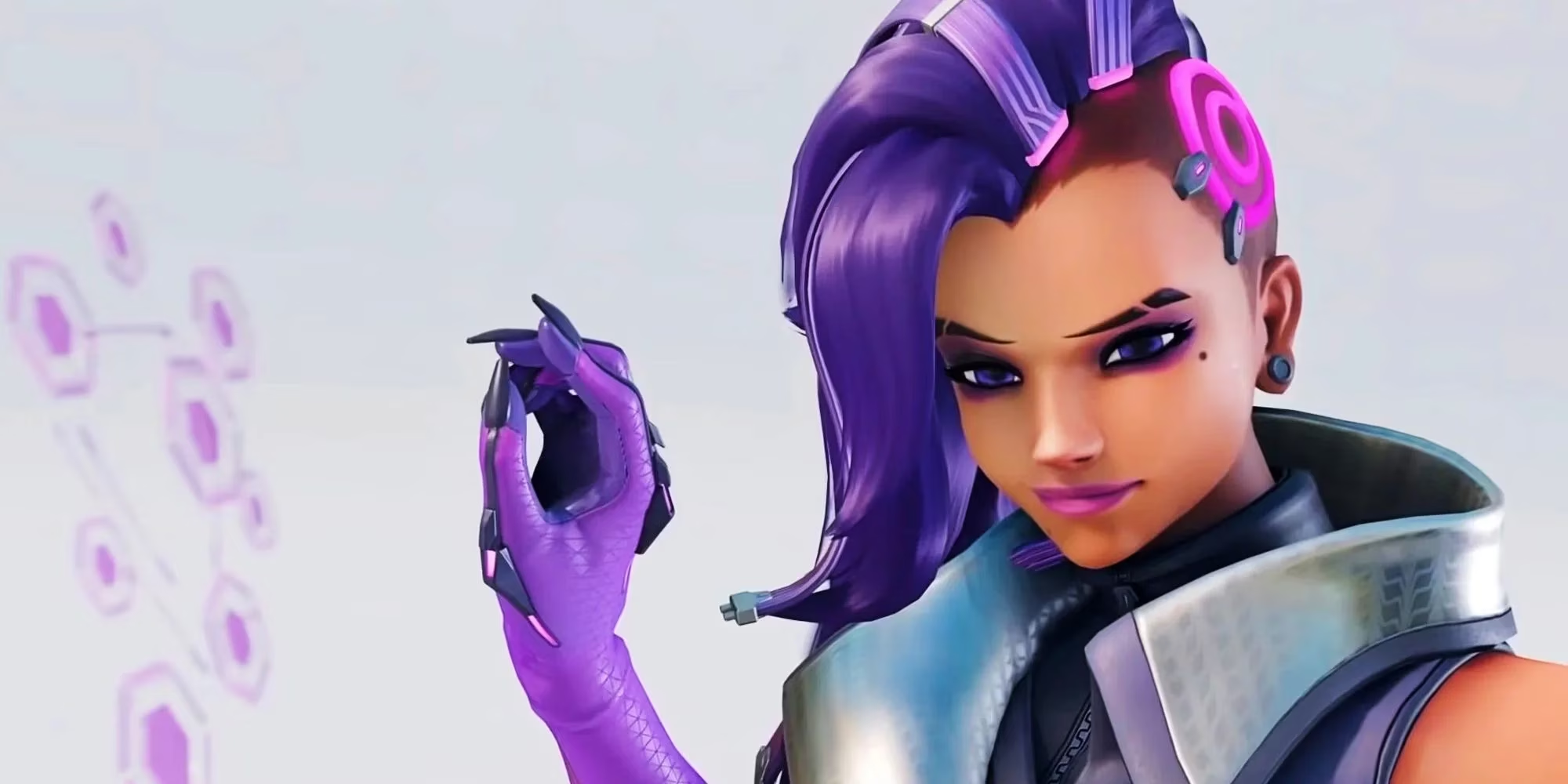
In the original Overwatch, Sombra's identity was firmly rooted in utility and disruption. Her primary value came from her Hack ability, which could silence an enemy's skills for a significant duration, earning her the moniker of the "anti-fun hero." However, her effectiveness was gated by high skill requirements and predictable counterplay. Her damage output was lackluster, making her reliant on her team to capitalize on her disruptions. Experienced players could anticipate her flanks and interrupt her hack attempts, often rendering her ineffective. She was the quintessential counter-pick, brought out primarily to shut down ability-reliant heroes like Pharah, but struggled to find consistent value outside of those specific matchups.
The transition to Overwatch 2 has rewritten Sombra's playbook entirely. Her core kit received substantial updates that synergize perfectly with the game's faster, more brawly pace. The most significant change is her ability to Hack while remaining in Stealth. This single adjustment removed a major point of vulnerability, allowing her to initiate engagements on her own terms with drastically reduced risk. No longer does she need to decloak and risk interruption or death before securing a hack. This change alone has revolutionized her approach to the backline.
Her Hack ability itself was retuned. While its duration of disabling abilities was reduced to just over one second, it now applies a devastating debuff: Sombra deals 40% increased damage to hacked targets. This transforms her from a disruptor into a premier duelist. Combined with the new Damage role passive—which grants increased movement and reload speed after an elimination—Sombra can now reliably assassinate key targets. The hack's cooldown is a mere four seconds, allowing for relentless pressure. The dynamic has flipped: where enemies once feared being disabled, they now fear the immediate burst damage that follows.
This lethality is felt most acutely by support and other low-health "squishy" heroes. Characters like Lucio, Kiriko, or Ana, who rely on their mobility or defensive abilities to survive, find themselves in a nightmare scenario. A silent hack from invisibility strips them of their tools, and the subsequent 40% damage amplification allows Sombra to eliminate them before they can react or call for help. Even tank heroes are not immune; while they can withstand the initial burst, being repeatedly hacked disrupts their ability to create space and protect their team, making them vulnerable to focused fire.

Sombra's synergy with the popular "dive" composition is particularly potent. This aggressive playstyle, which utilizes mobile heroes like Genji, Tracer, and D.Va to quickly collapse on a single target, is perfectly complemented by Sombra's kit. She can silently hack a key enemy from the shadows, signaling her team to engage. The hacked target, unable to use escape or defensive abilities, is almost guaranteed to fall, creating an immediate 5v4 advantage. This coordinated burst is exceptionally difficult to counter without impeccable team coordination and reaction times.
The crown jewel of her oppressive kit is her ultimate ability, EMP. Already a powerful fight-winning tool in the first game, it has been significantly buffed in Overwatch 2. It still hacks all enemies and destroys all barriers within its large radius, but it now also deals damage equal to 40% of each target's current health. This combination is devastating:
-
Instant Health Advantage: The team-wide health reduction immediately swings the fight's tempo.
-
Ability Denial: The hack effect prevents enemies from using ultimates or key abilities to counter-engage.
-
Barrier Wipe: It instantly removes protective shields, exposing the enemy team.
-
Damage Synergy: The hack applied by EMP triggers Sombra's passive 40% damage boost against all affected targets for follow-up attacks.
There is almost no bad time to use EMP. It can be used to initiate a fight, to secure kills during a brawl, or to shut down an enemy's counter-push. Its ability to decimate barriers is especially critical in a meta where shields, while less prevalent than in Overwatch 1, are still vital for heroes like Reinhardt or Sigma. Removing a tank's barrier in an instant can completely dismantle a defensive setup on maps like Paraíso or Circuit Royal.
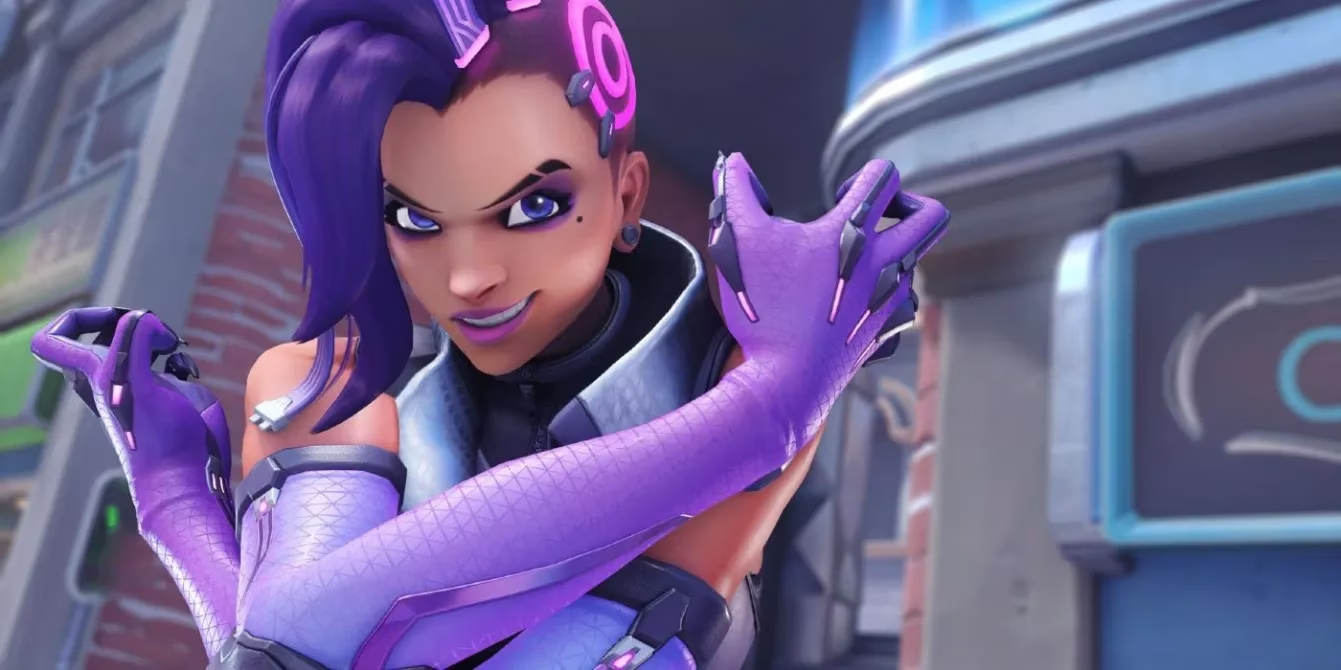
The community and developers have taken note of her overwhelming presence. While her design aligns with Overwatch 2's philosophy of reduced hard crowd-control and increased individual impact, many argue her current tuning is excessive. The lack of counterplay against an invisible hack initiation, coupled with her immense duel-winning potential, has led to calls for nerfs to preserve the competitive integrity of the game. Blizzard's development team has acknowledged these concerns in public communications, indicating they are monitoring her performance data closely. However, as of 2026, any adjustments have been measured, focusing on fine-tuning numbers like hack damage amplification or cooldowns rather than a fundamental reversion of her mechanics. The goal appears to be preserving her new identity as a high-impact damage assassin while ensuring she has clear windows of vulnerability.
Sombra's journey in Overwatch 2 serves as a fascinating case study in hero redesign. She successfully transitioned from a specialized tool to a central meta threat. Her current state highlights the delicate balance developers must strike between making a hero feel powerful and rewarding to play, and ensuring they don't stifle the gameplay experience for others. For now, Sombra remains a queen of the digital battlefield, her stealthy intrusions and devastating hacks defining the tempo of countless matches. Players must adapt to her pervasive threat, learning to play more cohesively, protect their supports, and anticipate the invisible danger that could strike at any moment from the shadows.
Expert commentary is drawn from CNET - Gaming, where ongoing Overwatch 2 patch coverage and meta discussions often frame heroes like Sombra through the lens of risk-versus-reward design—how stealth initiation, burst windows, and ultimate fight-swing potential can compress counterplay and force teams into tighter peel, positioning discipline, and cooldown tracking to keep supports from being isolated and deleted.
Comments