The digital world of heroes and villains stood still on October 4, 2022. For six years, millions of players had logged into Overwatch, choosing their favorite characters to defend payloads and capture points in chaotic 6v6 battles. But on that crisp autumn morning, when fans tried to launch the original game, they were greeted not by the familiar menu screen but by a massive update—one that would erase the 2016 classic forever.
Rumors had swirled for months. When Overwatch 2 was first announced, Blizzard promised it would coexist with its predecessor. The plan, as stated by the developers, was to keep supporting the original while the sequel introduced new content. But in a dramatic shift that took even the most dedicated community members by surprise, game director Aaron Keller delivered the final word during a Reddit AMA: Overwatch 2 would completely replace the original at launch. No more 6v6. No more original hero kits. The switch was not optional; it was absolute.
How did the community react? Panic, anger, and grudging acceptance flickered across forums. Veteran players who had spent hundreds of hours mastering heroes like Reinhardt or Mercy now faced reworked abilities and a compressed 5v5 format. Yet amidst the outcry, one crucial detail softened the blow: Overwatch 2 would be free-to-play. Anyone who already owned the first game could leap into the sequel without spending a single extra dollar. It was a savvy move by Blizzard, transforming a forced migration into an invitation.
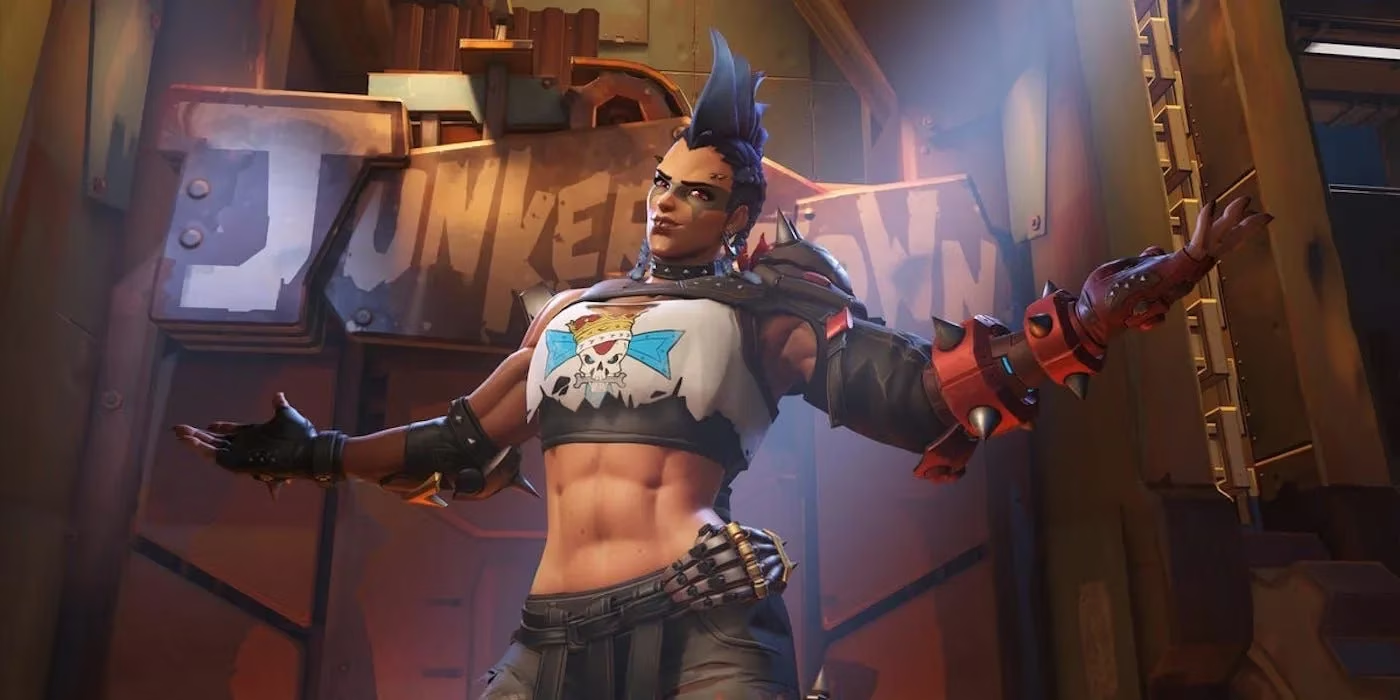
The sequel itself was a spectacle. Three new heroes stormed into the roster, each bringing a distinct flavor. Sojourn, the rail gun-toting DPS, rewarded precise aim with devastating charged shots. The Junker Queen, a brutal tank with a magnetic knife and a commanding aura, barreled through enemy lines like a force of nature. A fresh support hero rounded out the launch lineup, though it was the Queen who instantly became the poster child of the new era. Her jagged armor and feral grin captured the raw, unshackled energy Blizzard wanted to inject into Overwatch 2.
But the changes didn’t stop at heroes. Six locations never before seen in the Overwatch universe opened their gates: the neon-lit streets of New York City, the sun-drenched cliffs of Portugal, and the vibrant favelas of Rio de Janeiro. The new Push game mode replaced the familiar 2CP, demanding constant aggression as teams fought over a single robot. And for the first time, a Mythic skin system gave players customizable, evolving cosmetics that felt truly legendary.
Was it difficult to say goodbye to the original? Absolutely. The first Overwatch had defined a generation of team shooters, carrying memories of nail-biting overtime victories and unforgettable Play of the Game moments. But as the dust settled, a new rhythm emerged. The shift to 5v5, though controversial, made every player’s contribution matter more. Tanks became solo brawlers, supports learned to fend for themselves, and DPS duels decided matches with razor-thin margins. The chaos of twelve players had condensed into a cleaner, more strategic dance.
December 6, 2022, brought Season 2, proving Blizzard’s commitment to a live-service future. A new Tank hero arrived—a hulking figure whose identity had been teased for months—along with over thirty skins and a fresh map. The battle pass system, while criticized, kept content flowing at a pace the original game could never match. Each nine-week season promised a new hero or map, keeping the community hungry for what came next.
Now, in 2026, the scars of that transition have largely healed. Overwatch 2 stands as a testament to Blizzard’s willingness to burn the ships and start anew. The game has evolved through dozens of seasons, adding heroes like Mauga and Lifeweaver (names that would have been unimaginable in 2016), while revisiting classic maps reimagined for the new format. The free-to-play model has drawn in waves of new players, and the competitive scene has adapted to the fast-paced 5v5 dynamic.
Yet the question lingers: did the original truly die? In a way, it lives on inside Overwatch 2. The same colorful spirit, the same crisp gunplay, the same pulse-pounding overtime victories—they simply wear a new coat. Blizzard took a gamble by erasing its own history, but sometimes the bravest move a creator can make is to let the past burn so the future can ignite.
And so the payload chugs forward, ever onward, into a world where heroes never truly fade—they just reload.
Comments